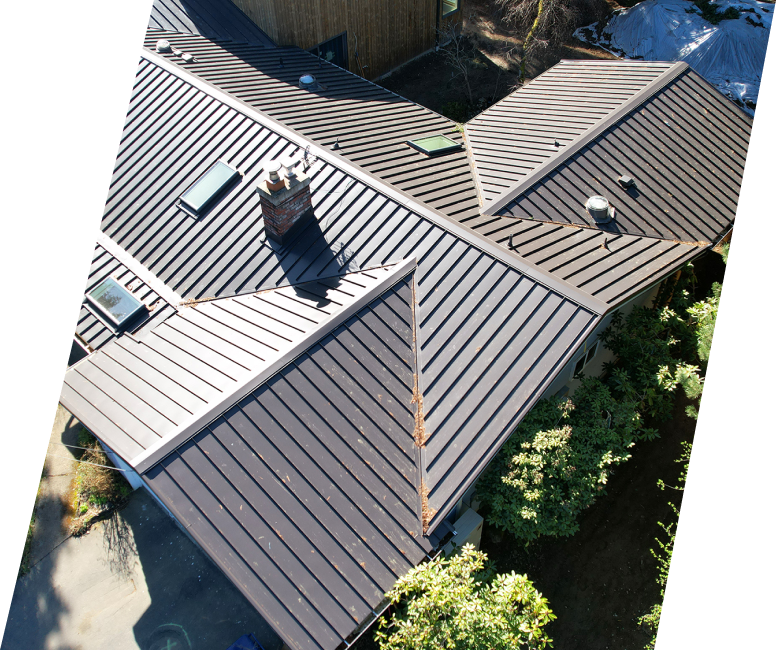

When homeowners think about gutter installation, most see it as a simple add-on rather than a critical protection system for their entire property. The truth is that properly installed gutters are your home’s primary defense against water damage that can cost tens of thousands to repair.
Every time it rains, your roof collects hundreds or thousands of gallons of water that needs to go somewhere, and where that water goes determines whether you’re protecting your investment or slowly destroying it. Understanding what happens with and without functional gutters changes how you think about this essential home system.
What Gutters Actually Do for Your Home
Gutters serve one primary function that branches into protecting nearly every part of your property. They collect water running off your roof and direct it away from your home’s foundation, walls, and landscaping through controlled drainage. This simple job prevents a cascade of expensive problems that develop when water flows unchecked.
Without gutters, rain pours directly off your roof edges, hitting the ground with enough force to splash mud and debris onto your siding. This constant bombardment stains and damages exterior walls over time. The water pools around your foundation, creating pressure against basement walls and finding any crack or weakness to seep through.
Foundation damage from poor drainage is one of the costliest problems homeowners face. Water pooling around your foundation causes soil erosion underneath, leading to settling and cracks. In cold climates, that water freezes and expands, making cracks larger with each freeze-thaw cycle. Foundation repairs easily run into tens of thousands of dollars.
Landscape erosion happens quickly without proper drainage. Heavy rain creates channels in your yard, washing away topsoil, mulch, and plants. These erosion patterns grow deeper each storm, eventually requiring expensive landscaping repairs and potential grading work.
Basement flooding often results from water pooling against your foundation. Even homes without obvious foundation cracks experience moisture problems, mold growth, and damaged belongings stored in basements when water infiltration goes unchecked.
The Installation Process That Makes or Breaks Performance
Quality gutter installation involves far more than just hanging metal channels along your roof edge. The details of proper installation determine whether your system protects your home or creates new problems.
Proper pitch is critical for gutters to function correctly. Installers must create a slight slope, typically a quarter inch for every 10 feet of gutter, directing water toward downspouts. Too little pitch and water pools in the gutters, causing overflow and attracting mosquitoes. Too much pitch looks awkward and can stress the mounting system.
Secure mounting keeps gutters attached to your home during heavy rain and wind. Quality installations use the right combination of fascia brackets, roof hangers, or hidden hangers spaced appropriately for your climate and expected precipitation. In areas with heavy snow, closer spacing prevents gutters from pulling away under weight.
Seam quality determines whether your gutters leak at connection points. Sectional gutters require proper sealing at joints using appropriate sealants and fasteners. Seamless gutters eliminate most seams by forming continuous runs for each roof section, reducing leak potential significantly.
Downspout placement and sizing must handle your roof’s water volume. Undersized or poorly placed downspouts cause gutters to overflow even when they’re clean and properly pitched. The general rule is one downspout for every 35 to 40 feet of gutter, but roof area and local rainfall intensity affect ideal placement.
End caps and outlets need proper sealing to prevent leaks at these common failure points. These components take the most stress during heavy rain and must be installed with extra attention to detail.
Material Choices and Longevity
Different gutter materials offer varying levels of durability, maintenance requirements, and protection. Understanding these differences helps you choose the right system for your home and budget.
Aluminum gutters dominate residential installations due to their balance of affordability, durability, and rust resistance. They handle Pacific Northwest weather well, lasting 20 to 30 years with proper maintenance. The material is light enough to not stress your fascia boards but strong enough to handle typical precipitation loads.
Copper gutters offer the longest lifespan, often exceeding 50 years, and develop an attractive patina over time. The high cost limits their use mostly to high-end homes or as accent features. Copper’s natural antibacterial properties reduce algae and moss growth compared to other materials.
Steel gutters, whether galvanized or stainless, provide strength for areas with heavy snow loads or extreme weather. Galvanized steel requires more maintenance to prevent rust, while stainless steel offers durability similar to aluminum with added strength.
Vinyl gutters cost less upfront but don’t last as long, especially in climates with temperature extremes. They can become brittle and crack in cold weather or warp in intense heat. For budget-conscious homeowners in mild climates, they provide adequate short-term protection.
Seamless versus sectional construction affects both performance and cost. Seamless gutters require professional installation with specialized equipment but offer superior leak resistance. Sectional gutters cost less and allow DIY installation but require more maintenance at seam connections.
How Poor Installation Creates New Problems
Improper gutter installation often causes more damage than having no gutters at all because it creates a false sense of security while problems develop hidden from view.
Negative pitch, where gutters slope away from downspouts, causes water to pool and overflow at the wrong locations. This concentrates water damage in specific spots rather than distributing it evenly, accelerating foundation problems and soil erosion.
Inadequate fastening allows gutters to pull away from the house during storms or under snow load. Once gutters sag, they can’t drain properly and the problem gets progressively worse. Water overflows behind the gutter, running down the fascia and potentially into wall cavities.
Wrong downspout discharge creates problems even when gutters work perfectly. Downspouts that empty too close to the foundation defeat the entire purpose of the gutter system. Water should discharge at least 5 to 10 feet from the foundation, directed by extensions or underground drainage pipes.
Mismatched components from mixing different gutter systems or using incompatible materials cause premature failure. Different metals touching each other create galvanic corrosion. Undersized outlets for gutter size cause bottlenecks and overflow.
Ignoring roof characteristics during installation leads to inadequate coverage or overflow issues. Homes with common roofing problems need gutter systems designed to handle their specific drainage patterns and volumes.
Gutter Guards and Protection Systems
Adding guards or covers to your gutters can reduce maintenance needs, but understanding their benefits and limitations helps you make informed decisions.
Mesh screens sit on top of gutters, keeping out leaves and larger debris while allowing water to flow through. They work well in areas with moderate debris but can clog with small particles like pine needles or roof grit. Regular cleaning is still necessary but less frequent than unprotected gutters.
Reverse curve designs use surface tension to guide water into the gutter while debris falls to the ground. These systems work best with moderate rainfall but can be overwhelmed during downpours, sending water over the edge. They require professional installation and cost more than simple screens.
Foam inserts fill the gutter channel, allowing water to pass through while blocking debris. They degrade over time from UV exposure and can trap small debris within the foam itself, eventually reducing flow. They’re affordable and easy to install but need periodic replacement.
Micro-mesh systems offer the most effective protection, blocking even small particles while maintaining good water flow. The fine mesh keeps out pine needles, shingle grit, and other small debris that clogs other systems. Higher cost is offset by minimal maintenance needs and excellent performance.
No gutter guard system eliminates maintenance completely. All require periodic inspection and occasional cleaning, but they extend the time between cleanings significantly compared to unprotected gutters.
Downspout Extensions and Drainage Solutions
Getting water away from your foundation after it leaves the gutters completes the protection system. Several options handle this critical final step.
Above-ground extensions are the simplest solution, directing water several feet from the foundation. Flexible extensions can be moved for mowing or stored when not needed. Rigid extensions provide more permanent routing but can be tripping hazards. Both work effectively when properly positioned.
Underground drainage pipes provide the most elegant solution, carrying water away from the foundation through buried PVC pipes. These systems can discharge to the street, a dry well, or a lower area of your property. Professional installation ensures proper slope and prevents freezing issues in cold climates.
Splash blocks offer basic protection by dispersing water flow and preventing erosion directly under downspouts. They’re affordable and easy to add but don’t move water as far from the foundation as extension systems.
Rain barrels collect downspout water for landscape irrigation, serving dual purposes of conservation and drainage. They must include overflow systems that direct excess water away from the foundation during heavy rain.
Maintenance Requirements for Long-Term Protection
Regular gutter maintenance keeps your system functioning properly and protects your home year after year. Neglected gutters fail to protect regardless of how well they were installed.
Seasonal cleaning removes leaves, twigs, and debris that accumulate in gutters. Most homes need cleaning at least twice yearly, typically in late spring and late fall. Properties with overhanging trees may require cleaning three or four times annually.
Inspection during cleaning catches small problems before they become major failures. Look for rust spots, separated seams, loose fasteners, and improper pitch. Addressing these issues early prevents expensive repairs later.
Checking downspout flow ensures water moves through your system properly. Clogs often form in downspouts or at outlets where leaves compact together. Flushing downspouts with a hose during cleaning confirms they’re clear.
Winter preparation in cold climates includes ensuring proper drainage before freezing weather arrives. Ice dams can form when gutters don’t drain completely, creating additional weight and potential damage. For homes prone to winter storm issues, proper drainage becomes even more critical.
Fascia board inspection should accompany gutter maintenance. Water damage to fascia boards compromises gutter mounting and indicates drainage problems that need addressing. Catching roof replacement signs early includes checking how gutters and fascia are holding up.

Professional Installation vs DIY Approaches
Deciding whether to hire professionals or attempt DIY gutter installation depends on several factors including your home’s complexity, your skill level, and budget considerations.
DIY installation saves money on labor but requires proper tools, including ladders, levels, power tools, and safety equipment. The physical demands of working at height while handling long, awkward materials shouldn’t be underestimated. Mistakes in pitch, fastening, or seam sealing can create problems that cost more to fix than professional installation would have cost initially.
Professional installation guarantees proper pitch, secure mounting, and quality seam work. Companies like Roofing Formula LLC have the experience, tools, and materials to install systems that function correctly from day one. They also carry liability insurance protecting you from accidents during installation.
Complex rooflines with multiple valleys, dormers, or unusual angles benefit significantly from professional expertise. These situations require custom solutions that DIY installers often struggle to execute properly.
Seamless gutter installation requires specialized equipment that forms continuous runs onsite. This isn’t a DIY option, as the machines cost thousands and require training to operate correctly.
Cost Considerations and Value
Understanding gutter installation costs helps you budget appropriately and recognize fair pricing from contractors.
Material costs vary significantly by type. Basic aluminum sectional gutters might cost 4 to 9 dollars per linear foot installed, while seamless aluminum runs 6 to 12 dollars per foot. Premium materials like copper can cost 25 to 40 dollars per foot or more.
Labor represents a substantial portion of total cost, typically 50 to 70 percent of the project price. This covers skilled installation ensuring proper function and longevity. Complex homes with difficult access or special requirements cost more per foot than simple ranch-style homes.
Gutter guards add 8 to 30 dollars per linear foot depending on the system type. While this increases upfront investment, reduced maintenance costs and prevented water damage often justify the expense over time.
Downspout extensions and drainage solutions add to the total project cost but complete the system’s protection capabilities. Underground drainage can cost several hundred to several thousand dollars depending on distance and complexity.
Long-term value calculation should consider prevented damage rather than just installation cost. Foundation repairs, basement waterproofing, and landscape restoration easily cost ten times more than a quality gutter system. Proper installation protects your entire home investment.
Conclusion
The real story behind gutter installation reveals that these seemingly simple channels perform one of the most important protective functions for your entire property. Quality installation prevents foundation damage, protects your landscaping, and keeps water away from vulnerable areas where it can cause expensive problems.
The difference between properly installed gutters and poor or absent systems can mean tens of thousands in prevented damage over your home’s lifetime.
Whether you choose professional installation or tackle the project yourself, understanding what makes gutters work effectively ensures you’re getting real protection rather than just metal hanging from your roof. Your home deserves a gutter installation system that does its job properly every single time it rains.
Frequently Asked Questions (FAQs)
1. How Much Does Professional Gutter Installation Cost?
Professional gutter installation typically costs between 5 to 15 dollars per linear foot depending on material type, home complexity, and your location. A typical home requiring 150 to 200 feet of gutters might cost 1,000 to 3,000 dollars for basic aluminum sectional gutters or 1,500 to 4,000 dollars for seamless aluminum.
Premium materials like copper cost significantly more. This price usually includes all necessary downspouts, end caps, and basic mounting hardware. Complex rooflines, difficult access, or additional features like gutter guards increase costs. Getting multiple quotes from licensed contractors helps ensure fair pricing.
2. Can I Install Gutters Myself or Should I Hire Professionals?
DIY gutter installation is possible for handy homeowners with proper tools and safety equipment, potentially saving 50 to 70 percent on labor costs. However, professional installation offers significant advantages including guaranteed proper pitch, secure mounting, quality seam work, and liability coverage.
Simple ranch-style homes with straightforward rooflines suit DIY attempts better than complex multi-level homes. Seamless gutters require professional installation with specialized forming equipment. Consider your comfort working at height, attention to detail for proper pitch, and whether small mistakes might cost more than hiring professionals initially.
3. How Often Should Gutters Be Cleaned and Maintained?
Most homes need gutter cleaning at least twice yearly, typically in late spring after tree pollen and seed pods finish falling, and again in late fall after leaves drop. Properties with overhanging trees or heavy debris may require cleaning three to four times annually. Inspect gutters during each cleaning for rust, separated seams, loose fasteners, and proper pitch.
Check downspout flow by flushing with water to ensure they’re clear. Gutter guards significantly reduce cleaning frequency but don’t eliminate maintenance entirely. Regular cleaning prevents clogs that cause overflow and potential water damage to your home.
4. What Causes Gutters to Overflow Even When They’re Clean?
Clean gutters overflow due to several installation or design issues. Inadequate pitch prevents water from flowing toward downspouts, causing it to pool and spill over edges. Undersized gutters can’t handle water volume from your roof area during heavy rain. Too few downspouts create bottlenecks where water backs up faster than it can drain.
Improperly sized or clogged downspouts restrict flow even when gutters are clear. Some overflow occurs during extremely heavy downpours that exceed any system’s capacity, but regular overflow indicates problems requiring correction through reinstallation, adding downspouts, or upgrading to larger gutters.
5. How Do I Know If My Gutters Are Installed Correctly?
Correctly installed gutters show several telltale signs. Water flows smoothly toward downspouts with no standing pools after rain stops. Gutters remain firmly attached to the house without sagging or pulling away from fascia boards.
Seams and end caps show no leaking during or after storms. Water discharges well away from the foundation through properly extended downspouts. The system looks level to the eye while maintaining proper pitch, typically a quarter inch drop per 10 feet of run.
No water stains appear on siding below gutters, and no erosion occurs directly beneath downspout outlets. If you notice any opposite conditions, have a professional assess your installation.